Why a Floor Peels Away in Sheets
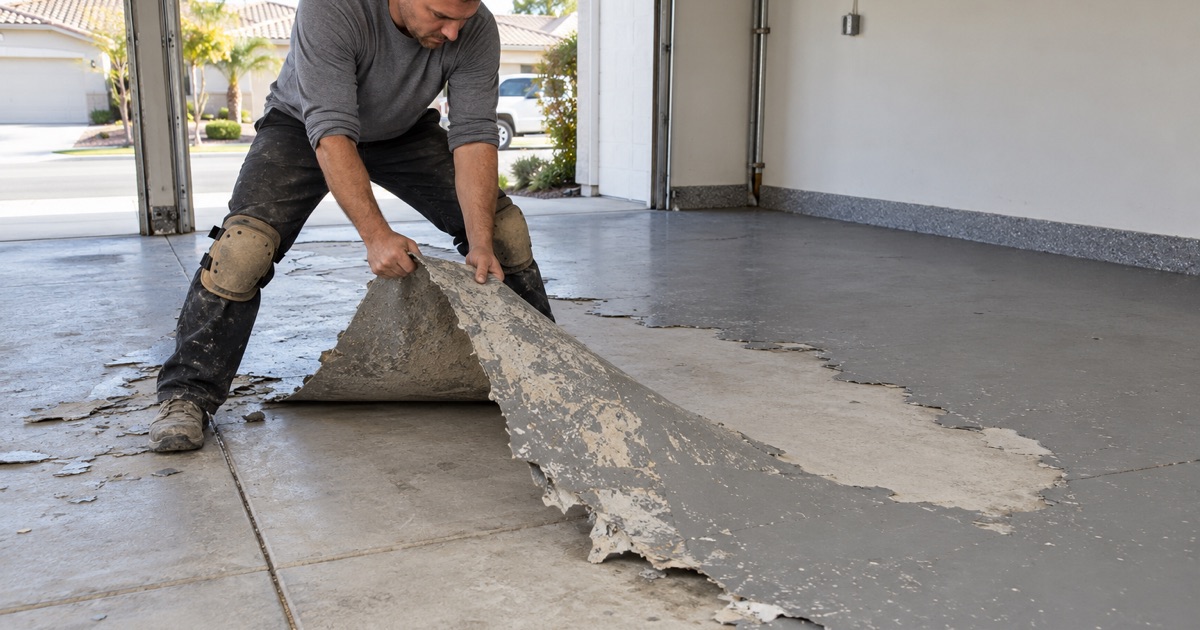
A coating that lifts in large intact sheets almost never failed within the resin — it failed at the bond line. The usual causes are an unprofiled or acid-etched slab, surface contamination, or moisture driving up from underneath. Recoating over an unchanged condition buys the same failure again.
Bubbles, Blisters and Pinholes
Pinholes are usually air pushed out of the slab as it warms during cure, which is a placement and timing problem. Blisters with moisture behind them are a substrate problem. Telling the two apart decides whether the fix is a technique change on the next coat or a full moisture mitigation system, so we open one up rather than guess from the surface.
White Powder Pushing Up Through the Floor
Efflorescence is mineral salt carried to the surface by water moving through the slab and left behind as that water evaporates. It is not a housekeeping problem — it is direct evidence of an active moisture path. Sanding it off and recoating simply traps the same water beneath a new film and starts the clock again.
The Taped-Plastic Test and What It Cannot Prove
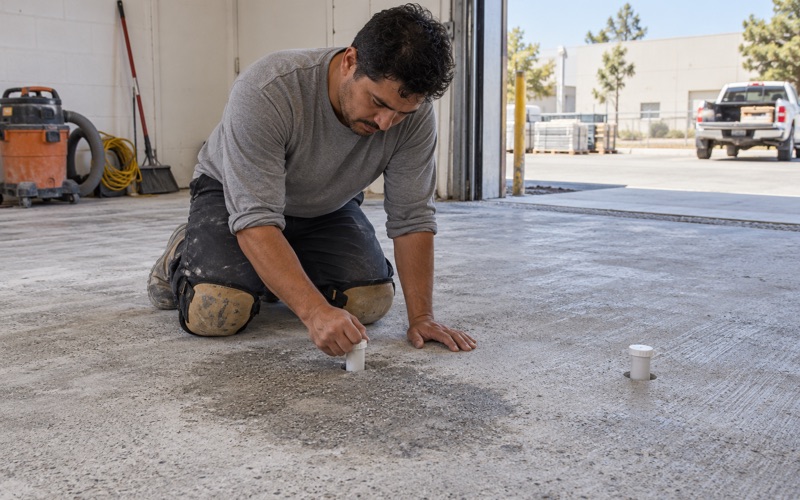
ASTM D4263, taping a sheet of plastic to the slab and looking for condensation underneath, is an asymmetric test. A positive result fails a slab outright, but a negative result proves nothing at all, because the method is not sensitive enough to clear one. It is worth doing as a first look and worthless as a clearance test, whatever a search result may tell you.
A Kit Floor That Lifted Inside a Year
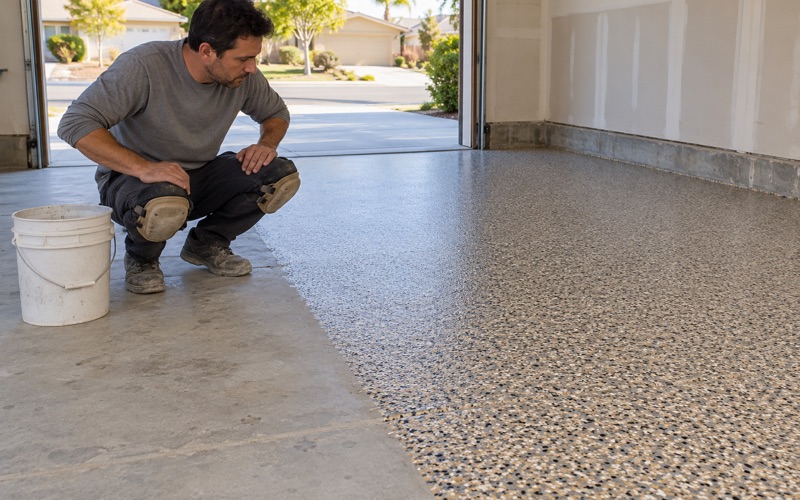
Consumer garage floor kits fail for two very predictable reasons: acid etching instead of mechanical grinding, and no moisture testing at any point. Correcting one costs more than doing the floor properly the first time, because the failed system has to come off before anything else can begin, and that removal is the expensive part of the job.
Oil-Soaked Concrete and Whether It Can Be Coated
Oil that has migrated deep into a slab keeps moving upward and will break the bond of whatever is placed above it. Degreasing and aggressive grinding recover most contaminated floors, but not every one, and on a badly saturated slab the honest answer is a test patch first, or replacement of the affected section.
Recoating Over It Against Taking It All Off
Where the existing system is sound, well bonded and chemically compatible, abrading and recoating is genuinely the cheaper path. Where it is failing anywhere, a recoat simply inherits that failure, because a new coating is only ever as good as what it is stuck to. We test adhesion rather than assume it.
The Moisture Exclusion Buried in Most Warranties
Moisture is the dominant failure mode in this trade, and it is also the failure most coating warranties specifically exclude. That is worth reading closely before signing anything, from us or from anyone else, and it is why the moisture reading goes into the proposal as a number.
Removing a Failed Coating Without Wrecking the Slab
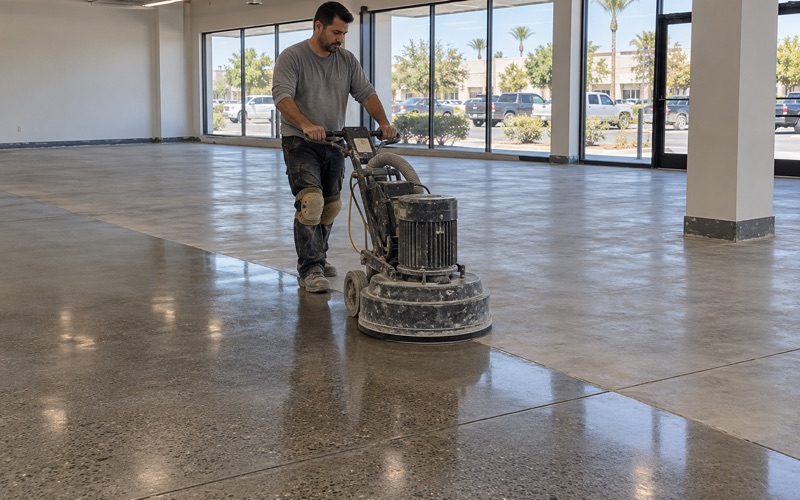
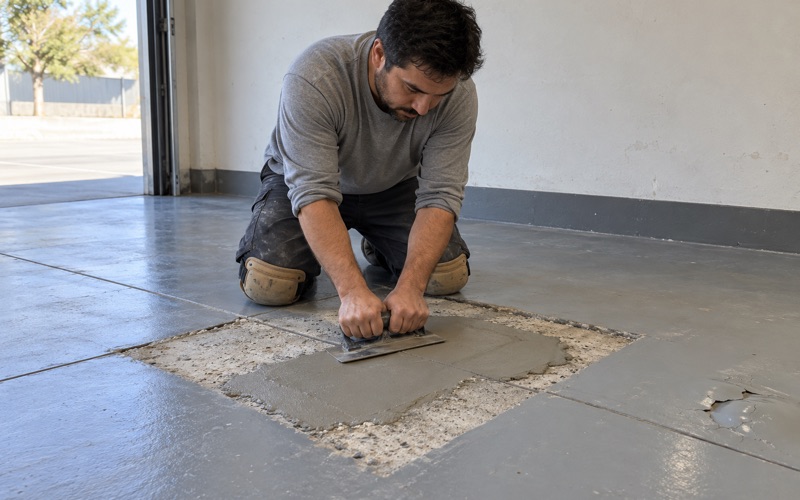
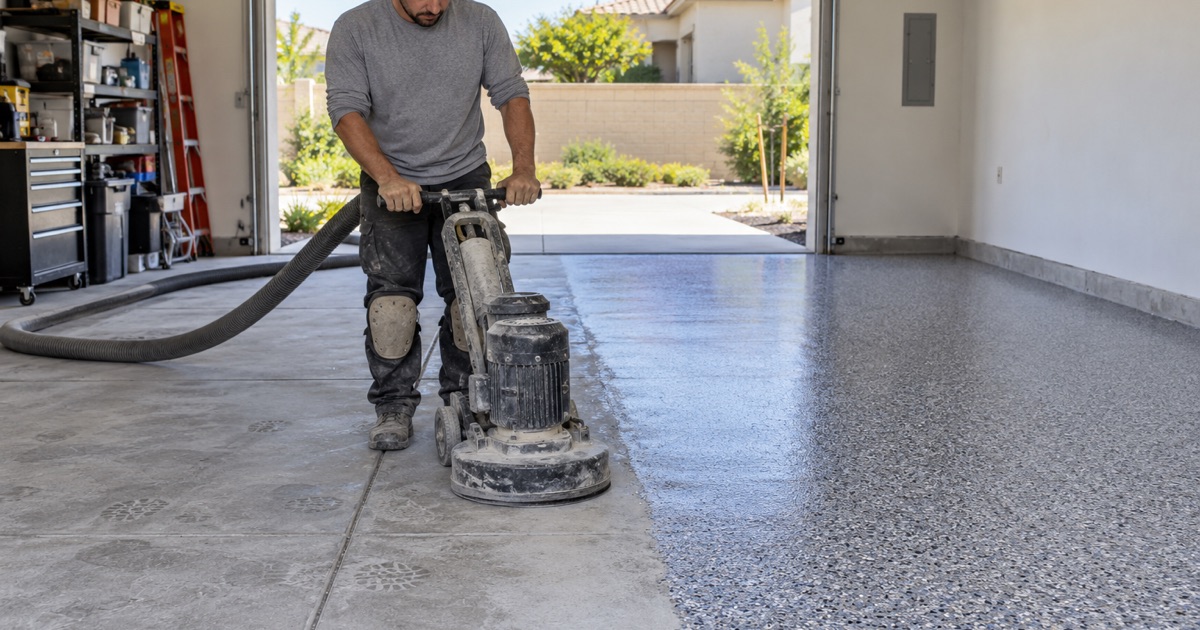
Coating removal is a tooling problem before it is a labor problem. PCD tooling shears a soft film off without gouging the concrete underneath, and the sequence then steps down through finer grits to leave a profile the next system can key into.
An Unheated Garage That Never Reaches Cure Temperature
Most epoxy data sheets set a minimum near fifty degrees for air, surface and material alike, with a further floor of five degrees above the dew point. An unheated garage at elevation can sit below that for months of the year, so the answer is a system rated for low-temperature cure, a heated and controlled space, or waiting for the season — not placing it anyway and hoping.